
Topic: Liver Failure
A severe condition that is characterized by the rapid deterioration of liver function when the liver is damaged and not able to function properly. It can be classified as acute liver failure (ALF) and/or chronic liver failure.
Defined by the American Gastroenterological Association as a rare, acute, and potentially reversible condition that results in severe liver impairment and rapid clinical deterioration. Characterized by the presence of coagulopathy (INR ≥1.5) in patients without cirrhosis or pre-existing liver disease and any degree of mental status alteration (encephalopathy) within 26 weeks of the onset of illness. Common causes include drug-induced liver injury (e.g., acetaminophen toxicity), viral hepatitis, malignancy, sepsis, and severe hypotension.
Most common and typically results from progressive liver damage over months to years, often due to chronic liver diseases such as cirrhosis, hepatitis B or C, alcoholic liver disease, or non-alcoholic fatty liver disease (NAFLD).
Acute conditions associated with decompensated cirrhosis
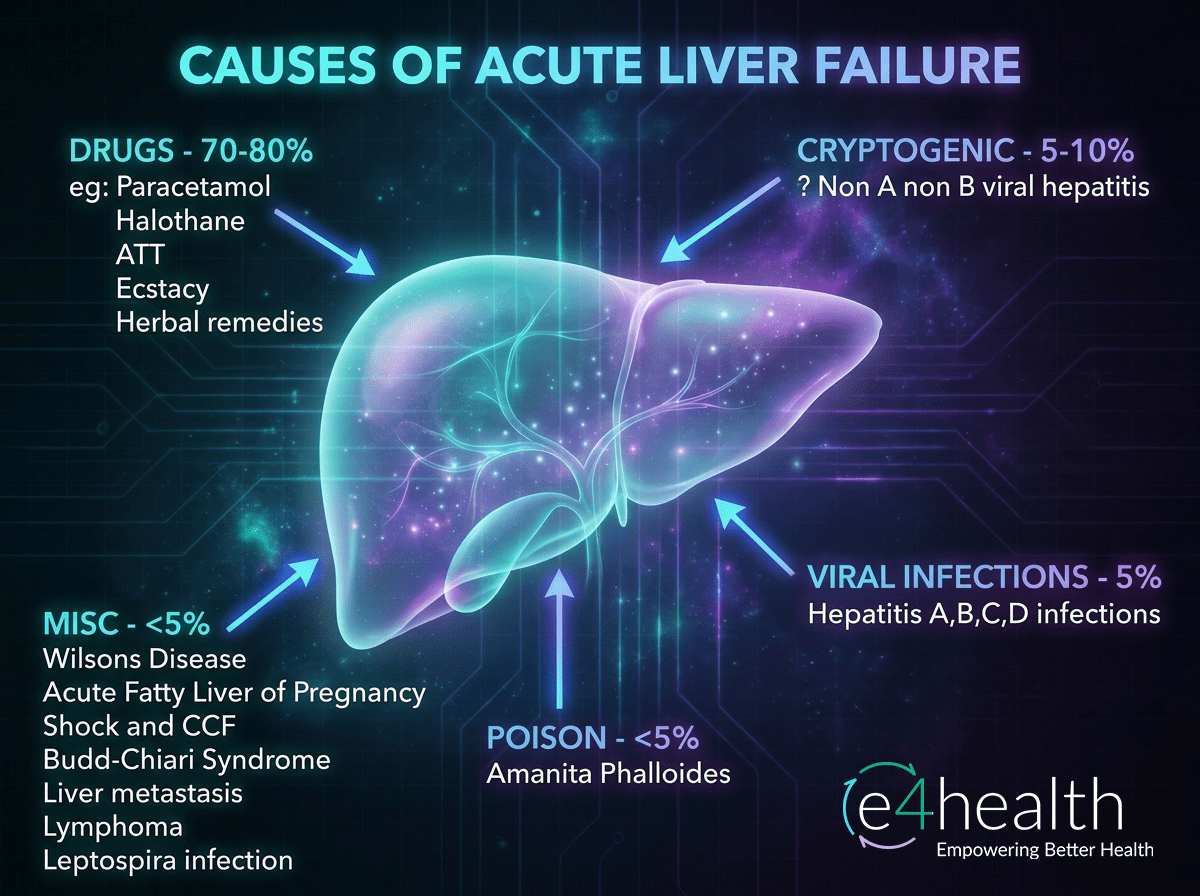
Diagnostic Criteria
Lab tests typically abnormal in acute and chronic liver failure
- ▸ Aminotransferase (AST & ALT) > 3 × URL
- ▸ Elevated bilirubin
- ▸ Low platelet count (< 150K)
- ▸ Other possible abnormalities: elevated creatinine, amylase, lipase, GGT, LDH, low albumin, anemia
Clinical presentation
Treatment and management
- ▸ Treat underlying cause and complications
- ▸ Avoid hepatotoxic medications
- ▸ N-acetylcysteine for Tylenol toxicity
- ▸ Lactulose for hepatic encephalopathy
- ▸ Vitamin K for coagulopathy
- ▸ Liver transplantation remains the definitive treatment for patients with poor prognosis despite maximal medical therapy. Early evaluation for liver transplants is crucial, especially in cases with rapid deterioration.
Coding & CDI Considerations
- ▸ If a patient is admitted for hepatic encephalopathy due to a chronic liver disease, the manifestation, encephalopathy, would be sequenced as the principal diagnosis.
- ▸ Cirrhosis is not usually assigned the principal diagnosis unless the patient is admitted for surgery as it is a chronic condition.
- ▸ “Carrier” of viral hepatitis codes to ‘chronic’ viral hepatitis.
- ▸ K76.82 hepatic encephalopathy (acute, chronic, or unspecified) is a non-cc. Also assign the chronic liver disease.
- ▸ K72.00 acute hepatic failure is an MCC. It includes acute/subacute hepatic failure, acute nonviral hepatitis and ischemic hepatitis.
- ▸ K72.00 is not assigned if the acute hepatic failure is due to alcohol, drugs, viral hepatitis, or is postprocedural.
Clinical pearls to keep in mind
Query Opportunity
Looking for CDI help?
Learn more about e4health CDI Solutions. Our team is leading the way in the CDI industry.
Explore CDI Solutions →Need help to earn CEUs or educate your team?
Visit the IQ Education Center and get your free account, or contact us for more information.
Visit IQ Education Centere4health is dedicated to elevating the business of healthcare. We are committed to offering support and the most current information and updates to collaborate with coding and CDI professionals to realize their fullest potential. We enthusiastically seek opportunities to develop ourselves and each other. We understand that knowledge is the key to success for our clients navigating the ever-changing health information management landscape.