Planning for the Unpredictable: Stabilizing Clinical Data Abstraction Under Pressure
How a major health system moved from three days behind to two weeks ahead of go-live.
When real-world volumes surged, tech dependencies faltered, and staffing shifted mid-project, one Southeast health system turned to e4health to protect clinical readiness ahead of an Epic go-live. In just four weeks, the Clinical Data Abstraction program was rebuilt and re-scoped, ultimately processing more than 15,000+ records and stabilizing performance ahead of schedule.
Download the resources
No form required — download the full case study and the companion checklist your team can reuse for go-live planning.
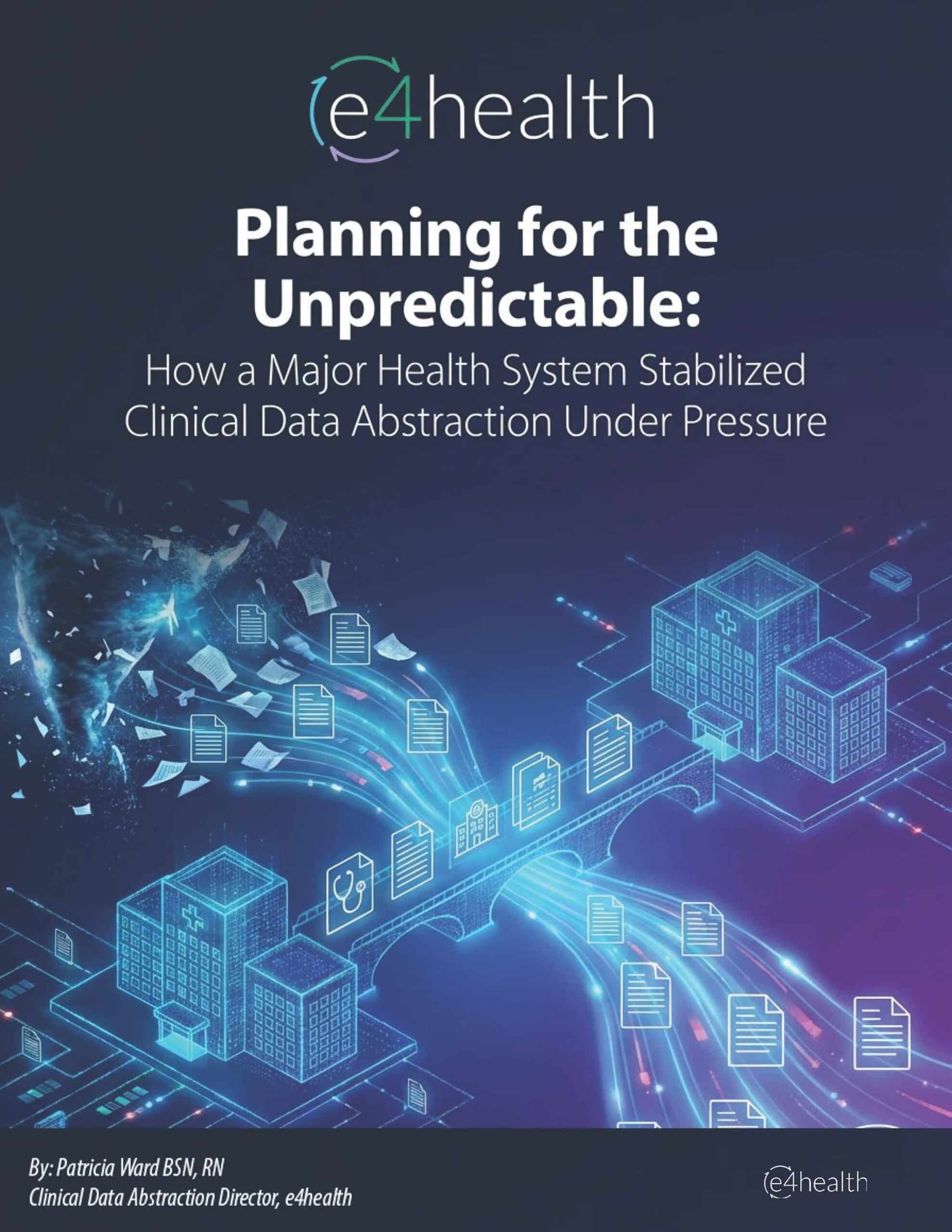
Planning for the Unpredictable
See how one health system stabilized Clinical Data Abstraction under pressure and moved from behind schedule to ahead of go-live.

Clinical Data Abstraction Planning Best Practices
A practical, reusable framework to help teams engineer time studies, surge readiness, governance, and quality controls before go-live.
Tip: Share the checklist with Clinical Data Abstraction, HIM, and IT leaders to align on scope, staffing, and escalation paths before cutover.
What happens when Clinical Data Abstraction plans meet real-world turbulence?
Get a concise view of how a regional, multi-specialty health system navigated underestimated volumes, CCD and patient-identity issues, and legacy-to-Epic lab order complexity—and how e4health stabilized Clinical Data Abstraction ahead of an Epic go-live.
- See how productivity was re-baselined and capacity expanded to keep pace with real-world demand.
- Understand the governance moves (escalation paths, weekend war rooms, shared logs) that kept teams aligned.
- Learn how data from time studies and exception tracking translated into a repeatable Clinical Data Abstraction playbook.

About the Author
Patricia Ward, BSN, RN, Clinical Data Abstraction Director at e4health, brings deep clinical and Health Information Management expertise to her leadership role. Beginning her career as a pediatric nurse, she later transitioned into clinical data abstraction, advancing from abstractor to leadership positions at Intellis before joining e4health.
Patricia now oversees e4health’s abstraction team, guiding projects from inception to completion while partnering closely with clients and collaborating with the sales team to expand and enhance e4health’s abstraction services. Her work is rooted in ensuring seamless data transitions and supporting improved healthcare outcomes through accuracy, quality, and effective collaboration.
Key Takeaways for Clinical Data Abstraction Leaders
- Clinical Data Abstraction programs rarely go exactly to plan — the difference is how you prepare for variability.
- Time studies, surge capacity, and clear governance should be engineered before go-live, not in the middle of a crisis.
- Fast-switch playbooks for manual abstraction protect clinical readiness when CCD, identity, or legacy-data assumptions break down.
FAQ: What this case study reveals
The themes below reflect what most teams don’t plan for — and what mattered most when conditions changed mid-project.