Topic: Intellectual Disability
Definition: Intellectual disability, formerly known as mental retardation, characterized by:
- Impairment of intellectual function (IQ< 70)
- Associated with adaptive behavior problems
- Begins prior to age 18
- Disrupts abilities necessary for independent living
- Lifelong condition where many will need some degree of assistance throughout their lives
Diagnostic Criteria:
- Diagnosing intellectual disability is a process that takes multiple steps:
- IQ testing- usually severity is not conclusive until child is older
- Assessing adaptive behavior capabilities
Coding Considerations:
- Mental retardation is indexed as intellectual disability.
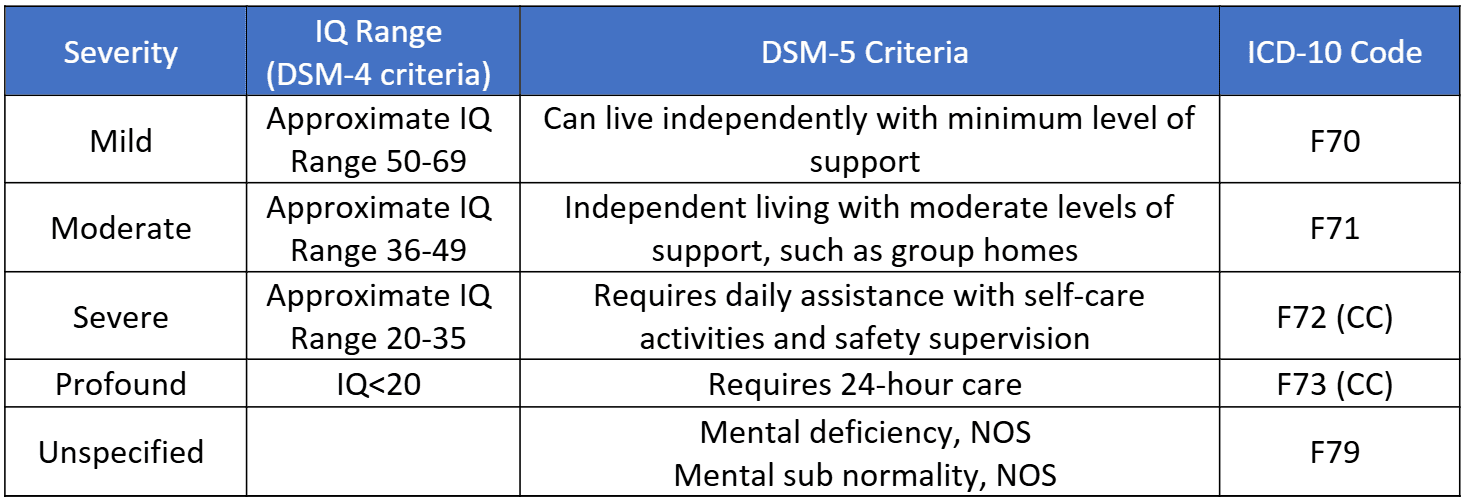
- Severity and/or the associated IQ should be documented, which are recognized as CC’s and SOI of 2 status.
- The underlying cause of the intellectual disability should be documented and coded.
- Other intellectual disabilities in ICD-10-CM include: F78.A1 SYNGAP1-related intellectual disability and F78.A9 Other genetic related intellectual disability. Code also associated conditions such as autism, encephalopathy, epilepsy, etc.
- AHA Coding Clinic, Fourth Quarter 2019, p.14
- Prader-Willi syndrome (PWS) is a complex neurodevelopmental disorder that affects many parts of the body. It is caused by lack of expression of genes in the paternally inherited chromosome 15q11.2-q13. During infancy, PWS is characterized by hypotonia, feeding difficulties, poor growth, and delayed development. Beginning in childhood, affected individuals develop an insatiable appetite, which leads to chronic overeating (hyperphagia) and obesity. PWS is the most common genetic syndrome causing obesity. Some people with PWS, particularly those with obesity, also develop type 2 diabetes.
- Code 87.9 was expanded to provide a unique code for Prader-Will Syndrome which is Q87.11.
CDI Practice Considerations:
- Be alert for the following causes of intellectual disability and query as needed. Some include, but are not limited to:
- Down’s syndrome
- Cerebral palsy
- Autism
- Birth defects
- Fetal alcohol syndrome
- Infection
- Head trauma during birth or early childhood
- Hypoxia during birth
- Premature birth
- Drugs, poisons, and toxins that disrupt fetal development
- Many patients with autism and cerebral palsy do not have intellectual disability.
- If provider does not state severity of the intellectual disability, there may be an opportunity to query for severity. Look for supporting documentation of the disability such as ADLs assistance, social assistance needed, language/literacy issues. Potential comorbidities for patients that have severe intellectual disability which may be query opportunities:
- Functional quadriplegia
- Pressure ulcers
- Aspiration pneumonia
Looking for CDI help?
Learn more about e4health CDI Solutions. Our Team is leading the way in the CDI industry.
e4health CDI Education
Need help to earn CEUs or education your team? Visit the IQ Education Center and get your free account or contact us for more information. e4health is dedicated to elevating the business of healthcare. We are committed to offering support and the most current information and updates to collaborate with coding and CDI professionals to realize their fullest potential. We enthusiastically seek opportunities to develop ourselves and each other. We understand that knowledge is the key to success for our clients navigating the ever-changing health information management landscape.
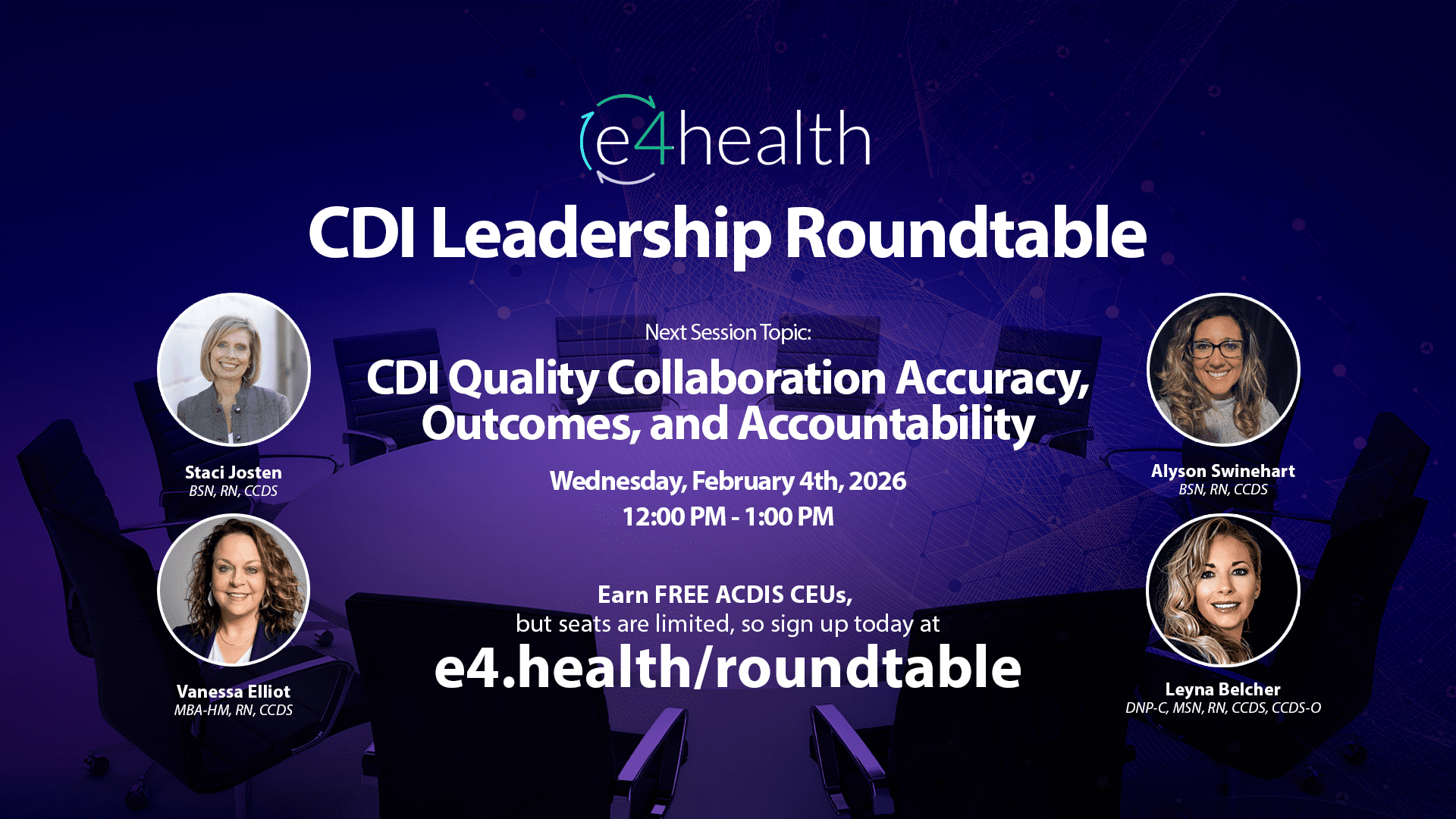
Earn FREE ACDIS CEUs when you join Staci Josten, RN, BSN, CCDS, Alyson Swinehart, BSN, RN, CCDS, and other CDI leaders for a roundtable discussion regarding important, timely industry topics! The topic for February’s discussion is CDI Quality Collaboration Accuracy, Outcomes, and Accountability. We will provide background on this topic, share industry insights, and facilitate collaborative discussion with guided questions and answers
Click here to register!
What is the e4health CDI Leadership Roundtable?
The goal for the virtual CDI Leadership Roundtable Discussion is for CDI leaders to explore specific topics within CDI, learn about the topic and from each other. During each roundtable, e4health CDI Leader’s will present a CDI topic, spend time sharing current industry standards or some education regarding this topic and then open with probing questions for group discussion.
Who should attend the e4health CDI Leadership Roundtable?
The focus of this group is for those who have influence over CDI program process, policy, and education.
Why should I attend the e4health CDI Roundtable?
This will be a wonderful place to learn, share your wins and challenges and collaborate with other CDI leaders across the industry. Also, after completing a survey, free ACDIS CEUs will be earned.
The information and opinions presented here are based on the experience, training, and interpretation of e4health. Although the information has been researched and reviewed for accuracy, e4health does not accept any responsibility or liability regarding errors, omissions, misuse, or misinterpretation. This information is intended as a guide; it should not be considered a legal/consulting opinion or advice.